3 Reasons Why You Might Need to Cut Down an Oak Tree

Oak tree are majestic in maturity, and was even names America’s National Tree in 2004. They commonly outlive people, capable of thriving on family farms and properties for generations. They are a staple in our landscaping, and stand as a symbol to our country’s history and family roots. They come in hundreds of different species, all of which possess their own unique characteristics and attributes. They grow very tall, and very dense, making them sturdy and strong through even the most inclement of times. But sometimes these beloved trees must come down, whether for safety or for expansion, oak tree removal is sometimes necessary. Continue reading to learn the three scenarios that would cause an oak tree to be cut down.

Oak Tree Removal

A mentioned, oak trees grow tall, dense, and strong. This means they are among the most difficult trees to remove in Indiana. It requires the professional training, skills, and equipment of a licensed arborist that provides tree removal services. Due to the hazards involved, and the potential dangers, it is strongly encouraged to never attempt oak tree removal on your own, without the assistance of a trained professional. Of course, if the tree is small or new, then you can probably manage, but full grown trees are a whole other level of work. You may need to remove an oak tree in three cases:

Lot Clearing & Landscape Expansion

If you are building a new property or commercial complex on an area of land that has an oak tree in the way, you might need to remove it for construction purposes. Similarly, if a home or property owner wishes to expand, either adding an addition to their home, installing an underground swimming pool, or renovating the landscape, they may need to remove an oak tree to make room.

Safety Hazards

If an oak tree’s condition or location happens to be a possible safety threat to people or property, it must come down. Due to the sheer size of a common oak, the potential damage it could do could be devastating. If it were to fall over, lose a large branch, or complicate utility lines, the effects could be highly dangerous and damaging. Vital roadways can get blocked, fires could start, property could be crushed, or worse, people could be hurt. If an oak tree is in a position to cause this kind of potential damage, it needs to come down immediately.

Disease

The last reason why an oak tree should be, or would be, removed is due to disease or infestation. Trees are vulnerable to all kinds of diseases and pest infestations, all of which can kill or cause extensive damage to trees. Once a tree is diseased past the point of no return, it will start to decay, from the outside in. This renders the tree highly unstable and can fall or break at any time. For this reason, diseased or dying oak trees must be removed before it can cause an accident.

Tree Service in Noblesville Indiana

Tree Service Coupons Noblesville IN

Tree Service Coupons 317-537-9770

Call Tree Service Noblesville at 317-537-9770 for professional oak tree removal, treatment, or information. We are highly trained, qualified, and experienced arborists that provide a wide range of tree services for residential and commercial properties. And although our prices are the most competitive in town, we also offer tree service coupons and discounts too! Call 317-537-9770 for professional assistance and advice regarding oak trees and tree removal in Noblesville, Indiana.

Evaluate Utility Lines Before Planting a Tree

Planting a new tree, or transplanting a grown tree, can be a tricky process. Trees are delicate and require the proper combination of food, water, sunlight, and preventative maintenance to remain strong, growing, and valuable components of a property. This means planting or relocating a tree should not be taken lightly. Pre-planning and evaluating is crucial for safe and non-conflicting tree growth. One of the most overlooked areas of tree planting is utility lines. Yes, many are aware of the overhead power lines, but many fail to consider underground utility lines too. Continue reading to learn how to properly evaluate utility line locations before planting or relocating a tree.

Overhead Utility Lines

Also these lines are pretty obvious and in plain sight, they can be easily overlooked in terms of gardening. Overhead utility lines can cause dangerous situations if trees are planted beneath them, and then eventually grow large enough to reach their height. And even if you think a tree cannot grow to certain heights, never under-estimate a tree’s growth potential! There must always be a safe clearance between power lines and treetops or foliage. Power companies will ask homeowners to trim or prune trees that are touching or growing close to utility lines. And although this seems like a reasonable request and simple-enough task, pruning trees this way is not good and puts the tree under physical distress; just another reason why they should not be planting near utility lines or poles in the first place. Potential dangerous of trees and power lines includes: fires, electrocutions (kids climbing trees), service interruptions, utility expenses, repairs, and more.

Underground Utility Lines

A tree’s root system can be just as broad and wide-spreading as a tree’s top. This means underground utility lines must be considered before planting a tree that will exceed great heights and size. Underground utilities include plumbing, heating and cooling, gas, additional fuel lines, and more. You can imagine the complications that can arise if any of these lines were damaged as a result of growing tree roots. Contact your local utility company for information on the location of your property’s underground utility lines before planting trees. This is even the law in most states!

Tree Service in Noblesville Indiana

Tree Service Coupon Noblesville Indiana

Tree Service Coupon 317-537-9770

Call 317-537-9707 for prompt and professional tree service in Noblesville, Indiana. When it comes to planting trees, tree transplanting, and lot clearing, we are the professionals to trust! Our highly trained and qualified arborists provide a wide range of tree services far beyond tree transplanting and tree removal. We also provide tree disease treatment, commercial tree service, trimming, pruning, shaping, and more! Call 317-537-9707 today and ask about our tree removal coupons and competitive pricing too!

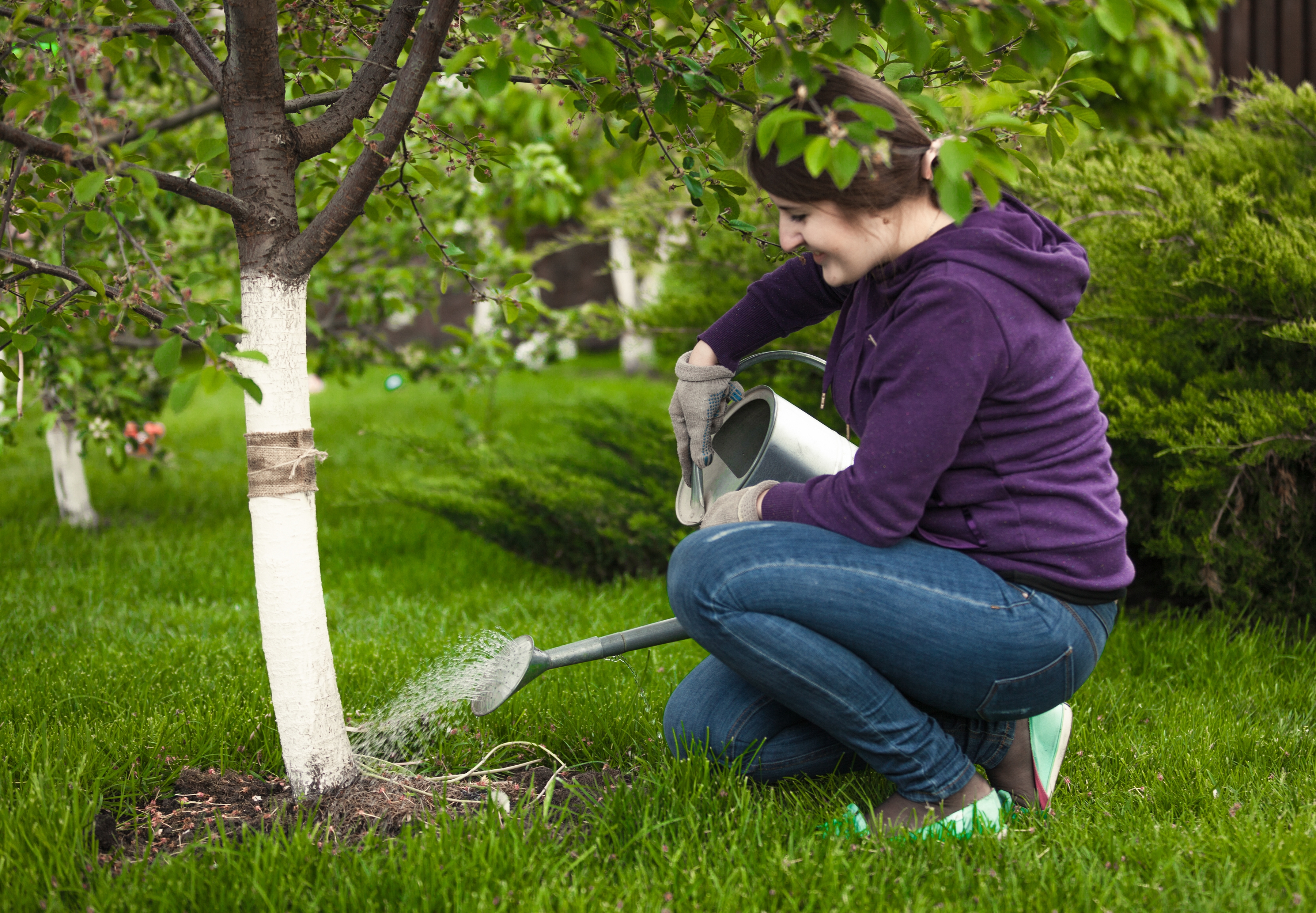
Do I Need to Water My Trees?

Noblesville Tree Service 317-537-9770

Noblesville Tree Service 317-537-9770

Newly planted or growing trees, usually in the first two or three years, do require consistent irrigating. There are a few things to know about watering trees in order to achieve the highest level of care. Trees can be over-watered, under-watered, and watered improperly. If you love your landscaping trees, take a moment to review a few facts and tips about watering trees and be better informed about proper tree care methods. Learn how to protect your trees from seasonal drought, root rot, weeds, and more.

Too Much Water

If trees are watered too much, its soil becomes over-saturated and the roots suffocate and die. And stagnant wet soil attracts unwanted root rot organisms that can also kill trees. Certain tree species can handle wet soil conditions (River Birch, Cypress, Sycamore, Etc.), but most cannot. You want to water enough to moisten the soil, but not overly-saturate it. Signs that your tree is being over-watered include yellow leaves, brittle leaves, visible fungus or algae growth on the soil beneath the tree, black tree roots (root rot), and more.

Not Enough Water

Trees need water for sustenance and growth, and even more-so during drought seasons or periods with extended lack of precipitation. Without water, trees cannot survive. It is that simple. It is important to find a happy-medium between too much and not enough water when it comes to your trees. During growing season, trees should be watered once a week, more or less depending on the amount of rain at the time. You want to water them, allow the water to soak in, and wait a few days before re-watering. If the soil around the tree is still moist one inch in, it does not need to be watered just yet. If it is dry 1 inch into the soil, it is ready for more water.

The Right Amount of Water

The trick to knowing how much water to give your tree starts with the tree trunk’s diameter. Measure this in inches, and then multiply that times five. Trees should get five gallons of water per inch of their trunk’s diameter, over an extended period of time. This is why line drips, bubbler heads, and irrigation systems come so highly recommended. You don’t want to dump 20 gallons of water at the base of a tree. That can over-saturate and harm the tree. If you only have a garden hose, simply turn the water on slow and low and then place it at the base of the tree for a few hours.

Additional Tree Watering Tips:

• Water At Night When Evaporation Levels are Lower

• Do Not Use Spray-Head Sprinklers – They are Less Efficient

• Lay Mulch at the Base of Trees to Conserve Moisture

• Combat Weeds and Other Nuisances that Compete with a Tree’s Water Source

• Control Water Run-Off by Edging the Mulch or Soil Around the Base of the Tree

Noblesville Tree Service

Tree Service Coupon Noblesville Indiana

Tree Service Coupon Noblesville Indiana 317-537-9770

Call 317-537-9770 for professional Noblesville tree service and advice you can trust. We are highly trained and qualified arborists with decades of experience in the tree removal and service industry. Our services range from tree removal and lot clearing, to transplanting, trimming, pruning, disease treatment, and more. We offer both residential and commercial tree services at the most competitive prices in town. Call 317-537-9770 for more information about tree removal services in Noblesville, IN and its surrounding locations.

Why Did the Leaves on My Tree Turn Brown?

In the summertime, tree leaves can fall victim to a variety of leaf illnesses and conditions. Insufficient watering, transplant shock, soil compaction, newly planted trees, moderate to severe drought, over-fertilization, and much more are all potential circumstances that can damage trees and their leaves. It can certainly be a mystery as to why the leaves on your trees are suddenly changing and falling off in the middle of the summer if you are new to gardening and tree care in general. Be sure to catch up on modern ways to care for your trees and plants without putting them at risk for leaf diseases and more. Continue reading to learn some facts about common conditions, influences, and scenarios that cause tree leaf discoloration, wilting, and more.

Leaf Scorch

In the case of leaves turning brown, curling up, and falling off, leaf scorch may be the likely culprit. The obvious signs of leaf scorch are yellow and brown-like color changes on the tips and ends of tree leaves. These leaves will eventually curl up, wilt, and drop off. This disorder is also referred to as Leaf Wilt and Leaf Burn. Nutrient deficiency, transplant shock, soil compaction, drought, and more are all common threats that cause leaf scorch and other similar tree problems.

Leaf scorch is a common condition that can occur if a plant or tree uses its water source faster than can absorb it from the ground soil. Plants and trees take in water through their fine feeder roots and transport it through their vascular system to the leaves. Leaf tissue that is farthest from these veins will suffer first from dehydration. These edges turn color and eventually curl up or fall off. This is the start of leaf burn. In drought-like periods, leaf scorch is much more likely to develop; due to the high temperatures and hot dry winds.

Also, certain types of trees are more susceptible to leaf scorch than other variety of trees; such as Red Oaks, Maples, and Flowering Dogwoods. These are trees with limited root systems, which make it harder to derive water from the soil below. As mentioned before, a tree can develop leaf burn if it is using water quicker than it can pull it from the ground; however, there are other possible situations that can also cause this leaf disorder.

Transplant Shock and Soil Problems

When a tree is moved or transferred to a new spot, it can go through a difficult adjustment phase known as transplant shock. This is another implication that can cause trees to lose their leaves in the summer time. Transplant shock occurs because the tree’s root system hasn’t has enough time to fully adjust to the difference in soil moisture, light conditions, amount of fertilizer, and other environs. It can take time for all these changes and acclimations to take place. Transplant shock can happen no matter how careful you transfer a new tree. It simply depends on nature and its surrounding elements.

Several root and soil problems can cause the leaves to fall as well. For example, if a plant or tree is watered excessively, the soil will become soggy. This prohibits the roots from getting any oxygen to grow newer, stronger roots. This will also eventually lead to leaf scorch. Root loss or inefficient root systems is another reason leaves can change color and deteriorate in the summer. Over-tilling and construction can cause roots to weaken; as well as, heat stress, dry winter and spring seasons, over-irrigation, excess fertilizing, and more.

Preventing and Curing Leaf Scorch

Browning leaf edges and wilting leaves is a sure sign of leaf scorch or atrophy. Unfortunately, once leaf scorch has developed, there is no cure. The damaged leaves will die and drop off; however, with proper tree care and water management, the tree’s leaves can recover and reproduce once again. When it comes to preventing leaf scorch, you must keep up with your seasonal tree care; especially winter watering. It is suggested to provide a deep soak, once a month, when there is no snow on the ground. This winter watering will prevent roots from atrophying from dehydration. This practice is helpful so long as you implement the soak on a day that is above freezing temperatures and early enough in the day so that the water does not freeze in the night chill.

Suggestions for Proper Tree Care and Guidance

A professional tree removal and maintenance company can answer any questions you have about residential tree care. They retain industry knowledge, as well as, all proper tools and equipment to facilitate any tree care job. It is important to consult a tree care professional before attempting any types of treatment, trim, or removal project. Tree care can be a dangerous task if you are not careful and trained in the process.

It is highly recommended to consult a tree professional for advice and information on how to treat tree diseases and more for residential and commercial properties. As a homeowner, taking responsibility for your trees and landscaping is a wonderful feeling and adds a warming sense of accomplishment and pride. It is understandable that dying or diseased trees can cause you a great deal of stress! Be sure to ask peers, neighbors, and of course, tree professionals, for advice and tips for better tree care for your property.

Tree Service Noblesville Indiana

Tree Service Coupon Noblesville Indiana

Tree Service Coupon Noblesville Indiana 317-537-9770

Call 317-537-9770 for professional tree service in Noblesville, Indiana. We are highly trained and qualified tree care contractors with decades of experience in the industry. We offer tree removal, trimming, pruning, shaping, tree disease treatment, stump removal, storm damage cleanup, lot clearing, and more for residential and commercial properties. Call 317-537-9770 to learn more about our affordable and reputable tree removal services in Noblesville, IN and its surrounding neighborhoods.
More Poisonous Plants and Flora in the United States – Part II

Last week we discussed some well-known plants and shrubberies that are surprisingly very poisonous, and in some cases, deadly. This week, we will reveal even more plants, flowers, trees, and vegetation that are also toxic and potentially fatal. Be aware that plants, trees, and flowers may seem harmless but render serious health risks. Always be on your toes when experimenting with a foreign or unknown plant, and do ample research about its qualities, best practices, and more. Continue reading to expand your knowledge on some more poisonous and toxic vegetation in our country.

In Your Garden

A popular flower called the Iris is not a good candidate for consumption. If the underground stems and roots are
eaten, it will cause severe digestive pains and complications. Although not serious or fatal, it is very unpleasant experience that should be avoided at all costs. Another common garden plant that can cause health impediments is called Lily of the Valley. This quaint little white bouquet of flowers are stunning, but the leaves and flowers are poisonous. It causes irregular pulse, mental confusion, and digestive distress. These symptoms can last a few hours or a few days, depending on the amount consumed. Additional garden-variety toxic plants and flowers include Foxgloves, Larkspur, Bleeding Hearts, Monkshoods, and Castor beans. Many of these are fatal so avoid adding them to your lunchtime garden salad.

Here is a list of more Toxic Vegetation to Look Out For:

Daphne – The berries are so extremely toxic that only a few can kill a child. These are fatal to both humans and pets, so beware!

Azaleas – All parts of this plant are fatal. Consumption can result in severe vomiting, nausea, breathing complications, prostration, depression, and then death. All of this applies to Rhododendron and Laurels as well.

Jasmine – The scent is relaxing and pleasurable, but the consequences of consuming the berries of Jasmine can result in death. Digestive complications and nervous system failure are common initial symptoms before death occurs.

Red Sage – Also called Lantana Camara, is another fatal plant. If its green berries are eaten, the heart, lungs, kidneys, and other vital organs and systems begin to fail. This results in death.

Buttercups – A popular childhood favorite with a sweet treat at just the right time of year, Buttercups are not fatal, but their juices can cause damage to the digestive system.

Nightshade – This common field plant is fatal if consumed. All parts of the Nightshade plant, including the un-ripened berries, can cause intense digestive irritation, nervous system complications, and eventual death.

Tree Service Noblesville Indiana

Tree Service Noblesville 317-537-9770

Noblesville Tree Service 317-537-9770

If you have questions about poisonous or toxic trees on your property, call our professional tree service company in Noblesville, Indiana. We are highly trained and qualified arborists with decades of experience in the tree service industry. We provide a wide range of tree services for both residential and commercial properties; such as tree removal, stump removal, stump grinding, tree transplanting, tree disease treatment, trimming, pruning, shaping, and more! We also offer tree service coupons! Call 317-537-9770 for fast and reputable tree removal in Noblesville, IN.

Well-Known Shrubberies and Flora that are Surprisingly Poisonous

Vegetation is one of the most vital resources on our planet because without it, life could not possibly thrive. Animals, humans, insects, and even other plant life rely on vegetation for nutrition and sustenance. As for humans, we eat an abundant amount of vegetation in our diet. From herbal teas to salads, vegetables, fruits, and more, we eat a variety of naturally-occurring plant life. It has taken several centuries for society to learn which shrubberies are safe and which plants contain toxicity levels that are harmful to our health. In fact, we are still taking chances and learning about newly-discovered plant life and vegetation all over the world.

It is important to be aware that there are many poisonous and even fatal vegetation in our country that should never be ingested under any circumstances. Ingesting these kinds of plants can result in extreme pain and suffering, and even death. Some symptoms are treatable while others have no remedy. Continue reading to review a list of common poisonous plant life and the consequences they render humans and other animals.

Poisonous Plant Life

Although a plant may seem beautiful and innocuous, it can potentially be fatal or extremely dangerous. Perhaps a plant you’ve had growing in your gardens all along is a highly toxic shrub. Below is a list of the most toxic and poisonous vegetation in America:

Oleander

This beautiful flower is actually very toxic, but not all parts. The leaves and branches contain a poisonous agent that can cause heart complications, digestive upset, and even death.

Rhubarb

Although we often eat rhubarb in stews, pies, and more, certain parts are actually very toxic. The leaf blades contain a highly toxic agent that, if eaten in large amounts, can be fatal. It’s symptoms include convulsions, coma, and sudden death.

Wild and Cultivated Cherries

Cherries are delicious, but the twigs and stems contain a compound that releases cyanide. This causes death, but not before severe gasping, excitement, and prostration.

Oak Trees

Beautiful mighty oaks are incredible pieces of nature’s puzzle. But if the foliage or acorns are consumed in large amounts, major health complications arise. Gradually the kidneys are affected, but it can take several days or even weeks for symptoms to show.

Water Hemlock

These are found in swampy areas and marshes, and are fatal if any parts are consumed. Consumption will result in painful and violent seizures, followed by sudden death.

Mistletoe

Our beloved flora that insists we give a kiss can give the kiss of death right back. If the berries of a mistletoe plant are consumed, death can occur. Children and pets are common victims of this unfortunate circumstance.

Tree Removal Noblesville

Noblesville Tree Pruning 317-537-9770

Noblesville Tree Pruning 317-537-9770

Call 317-537-9770 for prompt and professional tree removal in Noblesville, Indiana. We are highly trained and qualified arborists with decades of experience in the tree service industry. We provide residential and commercial tree care at the most competitive prices in town. On top of great deals, we also offer tree service coupons! Call 317-537-9770 to learn more about Noblesville tree removal services and specials.

Popular Species of Evergreen Trees Found in Indiana

There are several species of evergreen trees found in our wonderful state of Indiana. Three of the most popular and well-known species include the White Pine, the Hemlock, and the Eastern Red Cedar. Evergreen trees are also referred to as conifer trees, never lose their leaves. They remain full of foliage that doesn’t fade or change in color. They are “always green” as their binomial name, sempervirens, suggests. Although most conifer trees are evergreens, there are a few exceptions. For example, the Larch tree is a conifer, but not an evergreen. It is deciduous and loses its leaves in the fall. Evergreens are not always trees; they can be plants and shrubs too, like Holly and Juniper bushes.

As for Indiana, we can expect to see a broad selection of evergreens this winter, trees and shrubs alike! Continue reading to learn about a few interesting species of evergreen found across the state, and who to call for professional tree advice and information in your neighborhood.

Eastern Red Cedar

This tree is scientifically known as Juniperus Virginiana, and is found all across eastern North America, the borders of Southeastern Canada, and even down through the Gulf of Mexico and eastern Great Plains. Red Cedars are true Junipers. They are beautiful conifers that grow at a very slow rate, but into very dense, solid trees. In poor soil that lacks proper nutrients, Eastern Red Cedars will not usually grow into nothing more than a shrub; but in nutrient-rich soils, they can achieve great heights as trees with full foliage.

White Pine

Eastern White Pines, or Pinus strobus, are canopy trees that can grow as tall as one hundred feet or more. They have tiered, horizontal branches that makes them more distinctive among other evergreen species. Each year, a new row of branches grows. Its needles are have a blue-green hue to them, and grow in feathery tufts. They are found in most Indiana towns, but throughout the Northeaster parts of the United States as well.

Hemlock

Hemlocks, scientifically named Tsuga Canadensis, are perfectly pyramidal conifers. Their limbs grow long, sprouting branches covered in short, feathery, dark-green pine needles with silver-ish undersides. They can reach heights of 40 feet or more. They are often trimmed into hedges in residential and commercial areas.

Noblesville Tree Service

Noblesville Tree Service 317-537-9770

Noblesville Tree Service 317-537-9770

Call 317-537-9770 for professional Noblesville tree service you can trust. We are highly trained and qualified tree service contractors with several years of experience in the industry. We offer a wide range of tree services for residential and commercial properties in Indiana. Our knowledgeable arborists are happy to answer your questions about tree removal or tree service, any time. Just call 317-537-9770 and speak to a company owner directly regarding tree removal services in Noblesville, IN.

Why Did My Pine Tree Lose its Needles?

Pines are beautiful, bountiful, and magnificent coniferous resinous trees that stay sharp and bright all year round. So when their needles begin to discolor or drop off, or both, many homeowners have questions. Is my pine tree dying? Will the needles grow back? What is causing this? How can I fix this? These are just some of the common questions that arise in the case of a pine tree losing its needles. Don’t immediately think you have to cut a pine tree down if its needles are dropping off; there is a perfectly good explanation to why this is happening. Continue reading to learn the causes behind pine needle loss, and how to find a solution that works for your landscaping.

Pine Tree Needles

Evergreen trees, like pines and conifers, don’t always stay green forever despite their name. They are at risk of losing their needles, discoloration, and even death. Spring and summertime are the popular seasons for pine needles to grow and thrive, lasting anywhere between two and four years, or more. So with this being said, you can naturally understand that the newer pine needles are at the branch tips, while older needles are closer to the back in the crown. Older needles cannot produce food as efficiently as newer ones can, as they lose this ability as they age.
They are also kept more in the shade seeing as how they are in the back of the branch and beneath the crown. Less sunlight is not healthy for pine needles, and diminished food-producing proficiency doesn’t help the tree, so needles can begin to die and drop off. Before doing so, it is normal for them to discolor as well. Needles can discolor to various shades, such as golden-brown, brown, tan, shades of yellow, and even orange.

Loss of pine needles does mean that the needles are old and dying, but it does not mean that there is something wrong with the tree, nor can pine needle loss damage a tree. There are constantly more needles to take the place of fallen ones. If your pine tree is losing its newer pine needles, like the ones at the ends of a branch, then you might need to investigate further. Contact a local Noblesville Tree Service for accurate industry diagnostics and advice.

Tree Service in Noblesville, Indiana

Noblesville Tree Service 317-537-9770

Noblesville Tree Service 317-537-9770

Call 317-537-9770 for superior tree removal and tree service in Noblesville, Indiana. Our highly trained and qualified arborists are happy to answer your questions about tree care, tree disease, pine trees, and more. We offer several types of tree services for residential and commercial properties, as well as, free estimates, tree service coupons, emergency tree removal, and much more! Call 317-537-9770 to learn more about pine tree removal in Noblesville, IN today.

Can English Ivy Harm a Tree?

Although primarily native to Asia and Europe, English Ivy can also be spotted growing on brick walls, buildings, gates, and more, throughout the United States. Also referred to by its scientific name, Hedera Helix, this species of vine has managed to make the noxious weed list in our country. English ivy is truly beautiful, and often renders stunning growth patterns and capacities; but when it comes to our beloved landscaping trees, it can pose a serious problem. Continue reading to learn more about the harmful effects of English Ivy on trees, and who to call for professional and effective ivy removal services and more.

The Problems Associated with English Ivy

English ivy, and similar species of invasive vine, are considered nuisance weeds in the United States. As mentioned, it has made the official noxious weed lists in a few states across the country. It is very pretty on certain objects and buildings, often times providing additional insulation and protection against harsh elements; but it must always be managed. This is not the same case when it comes to trees and other flora. Ivy can truly damage trees. If you are experiencing ivy problems, or wish to get rid of ivy on your trees, contact a Noblesville tree service for professional advice or assistance.

Here are a Few Ways English Ivy is Harmful to Trees:

• Ivy Can Climb to the Tops of Trees and Weigh Them Down Until They Fall

• Ivy Can “Choke” Other Plants and Flora and Create “Ivy Deserts” Where No Other Plants Can Develop

• Overcomes and Destroys Natural Wildlife Habitats

• Ivy is Heavy and Dense, Causing Trees to Suffer Excess Distress

• It Can Suffocate a Tree with its Tight Grasp and Prevent a Tree From Increasing its Width

• Ivy Blocks Sunlight to a Tree and its Leaves, Reducing Nutrient In-Take

• Ivy Blocks the Exchange of Gas in the Pores of a Tree, Called Lenticils, Inhibiting a Tree’s Ability to Function

• Ivy Roots Lay On Top of Tree Roots and Steal All the Water and Nutrients in the Soil

Tree Service Noblesville Indiana

Noblesville Tree Service 317-537-9770

Noblesville Tree Service 317-537-9770

Call 317-537-9770 for professional ivy removal, ivy management, and tree service in Noblesville, Indiana. We are highly trained and qualified arborists with several years of experience in the tree removal and tree care industry. We provide a wide range of tree services for residential and commercial properties. Tree revival, tree disease treatment, and ivy management are just a few tree services we offer. Call 317-537-9770 for more information about ivy removal or tree removal services in Noblesville, IN today.

Which Trees Last Through Winter?

As home and property owners, we value our exterior landscaping. It isn’t unreasonable to want a beautiful landscape all year long. Many people ask which trees will die in the winter, and which trees will survive year-round when it comes time to purchase and plant new ones. Continue reading to learn which trees are most recommended for winter landscaping and which trees will last through all climates all year.

Winter Tree Options

When you are looking for trees that will be bountiful and beautiful all year long, including winter, try pine, spruce hemlock, and fir trees. These trees have developed a way to protect their foliage in order to stay green all year long and not lose their leaves in winter. Their needles cut evaporation in order to retain water in cold seasons. These needles can vary from a vibrant green color, to darker greens and even grey-blue colors. They all grow and come available in numerous shapes and sizes, all of which can be chosen by preference as well. There are several different species, varieties, and cultivars of these kinds of trees, so depending finding the right ones depends on the region you live in and your personal preference. Remember to implement routine Noblesville tree care all year long in order to provide continual protection for newly planted trees.

Here are some examples of trees that are recommended for the Northern and Northeastern regions of the country. These species of trees will not shed their leaves, or lose their beautiful green colors, even when the snow starts to fall!

• Pine Trees
• Austrian Pine
• White Pines Trees
• Fir Trees
• Concolor Fir
• Spruce Trees
• Norway Spruce
• Colorado Blue Spruce
• Serbian Spruce
• Black Hills Spruce
• Fat Albert Spruce
• Evergreens
• Green Giant Arbs
• Dark Green American Arbs
• Bald Cypress
• Canadian Hemlocks
• Emerald Green Arborvitae
• Techny Arborvitae
• And More!

Tree Service Noblesville Indiana

Noblesville Tree Service 317-537-9770

Noblesville Tree Service 317-537-9770

Call 317-537-9770 for professional tree service in Noblesville, Indiana. We are highly trained and qualified arborists with decades of experience in tree service. We can offer professional recommendations for winter tree selections, and provide routine or one-time tree care services for residential and commercial properties. We offer tree removal, tree transplanting, tree trimming, pruning, shaping, diseases treatment, lot clearing, storm damage cleanup, and much more. Call us today at 317-537-9770 for a free estimate for tree removal services in Noblesville, IN and its nearby neighborhoods.